Chocolate and churros

churros


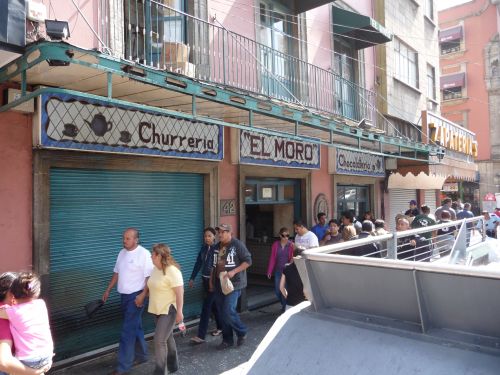
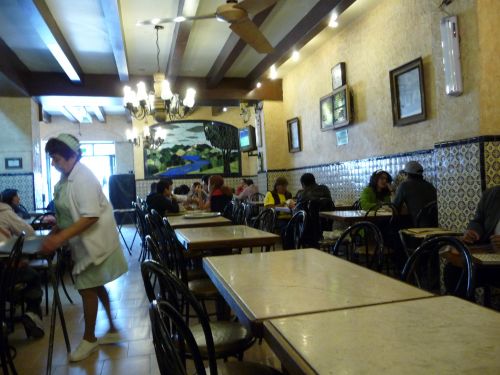
Little in life is reliable, but you can count on El Moro, which is open 365 days a year, 24 hours a day. El Moro is a joint on the Eje Central Lázaro Cárdenas #42 in the Centro Histórico. It is a cafeteria that serves the traditionally Spanish combination of hot chocolate and deep-fried, sugar-coated doughnuts called churros.


november-4-080

The hot chocolate at El Moro comes in four varieties (special, French, Spanish, or Mexican, in varying degrees of sweetness). To be frank, neither hot chocolate nor the brick-heavy churros is precisely my idea of comfort food. Still, I am extremely comforted whenever I go to this place. Maybe it is the fact that it has been here forever. And maybe it is because some of the waitresses seem to have been here since opening day.

moro

Gooo Goldman

frank-in-xel-ha

Last Saturday night the Mexican national soccer team lost miserably, 2-1, against Salvador (a typically undistinguished group), during the qualifying games for next year's World Cup. Mexico has played so miserably lately that they may end up not playing in the World Cup at all, which would be a disgrace, given how much football is a national obsession here (and given the spectacular salaries that Mexican football players earn. They tend to make far more money than players in Latin America who are significantly better than they are, particularly Argentines).

I saw the game at a restaurant in the Colonia Condesa called Xel Ha, with Francisco Goldman, author of such books as the extraordinary novel The Ordinary Seaman and The Art of Political Murder, the true story of the assassination of Bishop Juan Gerardi in Guatemala, which has just been translated into Spanish.

Here's Frank under the hot lights, explaining to a television crew that strolled into the restaurant exactly what the problems are with the Mexican team. He was very diplomatic, wondering why with all their concentrated efforts they weren't able to come up with the brilliant players they need to win. After the TV crew left, he was a little more straightforward. "Son güevones," he said. (They're lazy bastards.) "They suck."

Tourism

tourists

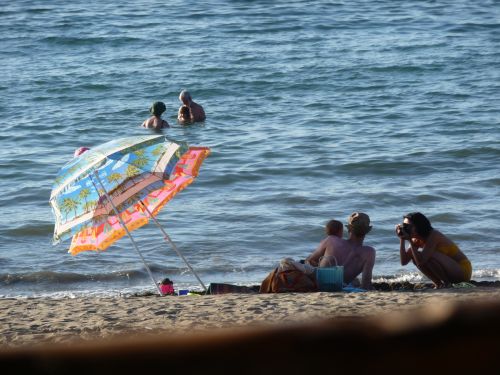
Thanks to the swine flu crisis the Mexican travel industry is in the basement. (Some might point to even lower regions, or to plumbing apparatus.) A shame, because this is such a wonderful country in which to be a tourist -- and it turns out that the flu wasn't much of a flu anyway. Sharp travelers will note that Mexico has become a bargain.
basri-and-lynne

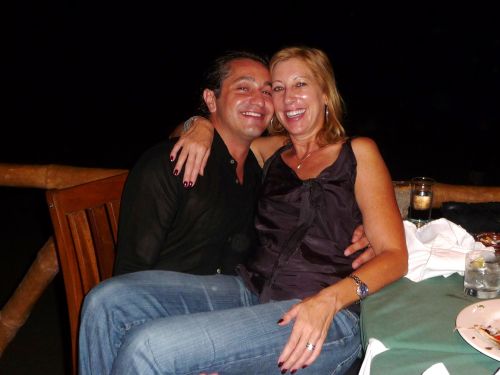
My friends Basri Emini and Lynne Bairstow rent and sell condominiums at Ayía, which overlooks the verdant golf course in the alarmingly exclusive compound Punta Mita (which also includes the Four Seasons and St. Regis hotels). The apartments at Ayía are a bargain compared to those hotels, and due to the tourism crisis are being offered at steep discounts -- such a deal that even the New York Times mentioned it in a recent article. Take a look at their website.
house-1

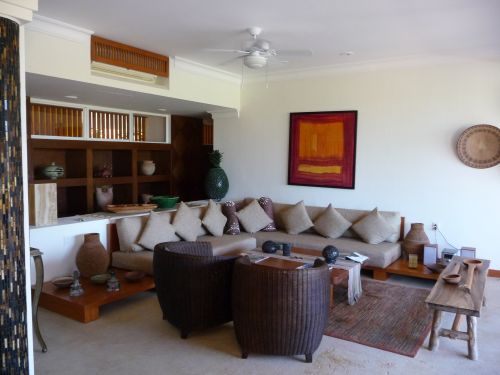
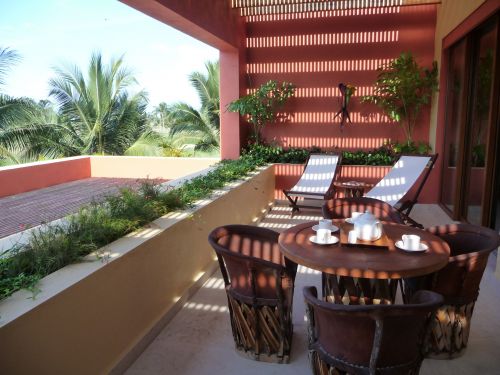
They recently invited me to spend a few days with them in Punta Mita. Here are some photographs of the luxury with which I was lavished.

house-8

house-5

house-6

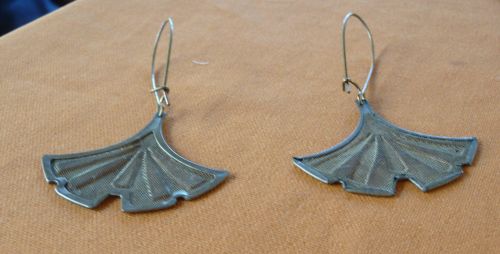
Staying at Ayía includes all the services of the Punta Mita beach club -- restaurant, bar, beach chairs and umbrellas, etc. There, one of the few tourists hearty enough to brave a Mexican vacation, lost a sand-colored earring in the sand just after sunset. This is what her earrings looked like. I tried to find the missing one but after a while gave it up as a lost cause.
earrings

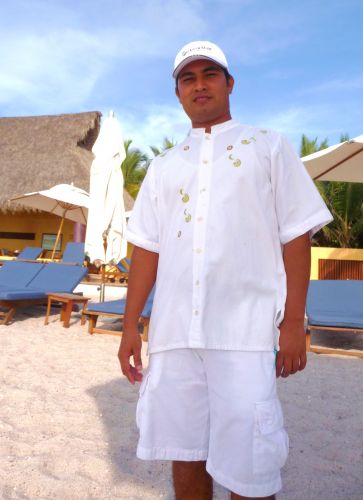
Yet Fray, one of the beach club's waiters, found it after five minutes or so of diligent searching -- in the dark, without a flashlight.
fray

This sort of service is one of the many reasons that I encourage all of you to think about Mexico for your next vacations.

Struttin' with some barbecue

menu

When people ask me what I miss about the United States, I instantly say "my friends." After that it often takes me a while to come up with anything else. The truth is that there are certain foods I crave that you cannot find in Mexico City. Among them is barbecue. I am talking about the kind you get south of the Mason Dixon line.

kg2

Luckily, the Dixie variety is not the only barbecue in the world. Here in Mexico City there is a significant Korean community, mostly made up of importers and exporters. Although they are not large in numbers, they are very visible, principally due to their restaurants and grocery stores on the fringes of the Zona Rosa.

spread

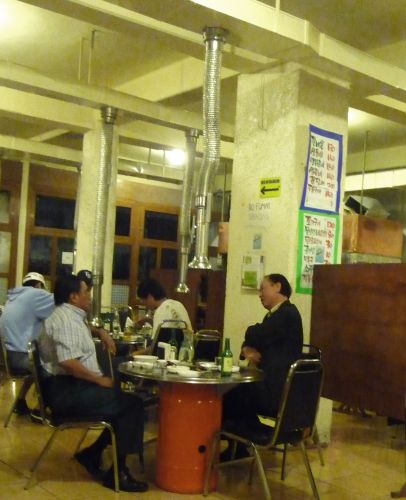
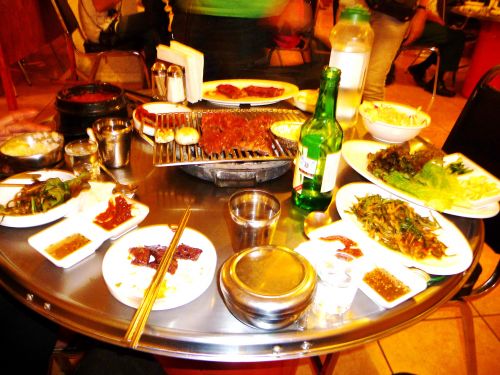
Last week I had some kickass Korean barbecue at Nadefo, on Calle Liverpool #183, near the corner of Florencia. I have never been to Korea but it was as good as any I've had in Korean restaurants in New York. My dining companion, a Korean American, liked it so much that she wanted to return the following night.

mr-kim

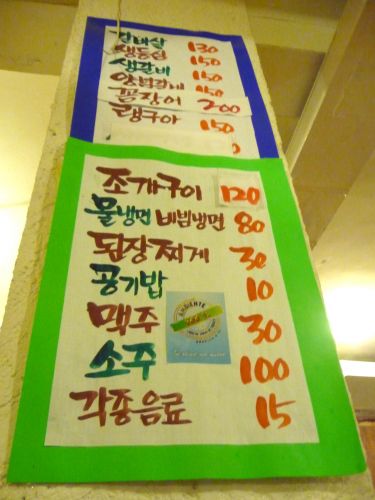
There is a small menu, including an outstanding spicy vegetable and tofu soup, and a couple of noodle dishes. Mostly you go to Nadefo for meats that are grilled over burning charcoals. If you don't know what you are getting into, the waiters -- or Mr. Kim, one of the owners -- will explain.

The emperor next door

last-prince-cover-smaller-1

My friend C.M. Mayo publishes the frantically active Madam Mayo blog, and is the winner of the Flannery O'Connor Award for her collection of short stories Sky Over El Nido. Unbridled Books has just released her novel The Last Prince of the Mexican Empire, an epic about Maximilian von Hapsburg, the Archduke of Austria, who for a few curious years in the 1860s was declared and installed as Emperor of Mexico. I look forward to a sunny afternoon, where I envision myself taking it up to the castle in Chapultepec Park (where Maximilian reigned, along with his wife, the bipolar Empress Carlotta). At 448 pages it will be a long afternoon, but knowing C.M.'s writing, I am sure it will be a page-turner. I wish her the best of luck with the book.