My paper


When I lived in New York, it was a guilty pleasure among certain supposedly educated citizens, myself included, to pick up the tabloid The Post in the morning. Frequently, the front-page headlines were so good that nothing inside the paper could possibly measure up. The most famous example, from the 1980s, is “Headless Body in Topless Bar.”


gas


Few of my friends here, except for the novelist J.M. Servín, admit to reading Metro, the local equivalent to the Post. Most days there is a bloody corpse on the cover (as frequently the result of a traffic accident as of a murder). The headlines are priceless, although hard to translate into English. Here are a couple of the milder examples from about a month ago, in the good old days before the swine flu crisis.


The headline above, about the explosion of 60 cylinders of gas after a truck crashed, is a variation on a standard insult, ¡A su madre!, which is a sort of all purpose expletive whose meaning depends on the context. Literally it is an insult to someone’s mother. Metro’s version, !Gásumadre! combines the word gas with the insult. (Like I said, something gets lost in the translation.) The headline on top of the page alludes to the arrest of various pedophiles, one of whom was a priest.


tortear


If you read this blog regularly, you may remember a recent post about a 46-year-old systems engineer named David Mondragón Vargas. While wearing a wig and a dress, he was arrested on the metro during rush hour, in cars reserved for women only. He had been sexually accosting them. The headline here, Vestida … para tortear, is a variation on the title of a Brian De Palma film from the 1980s called Dressed to Kill, or, in Spanish, Vestida para matar. The translation of Metro's headline is, more or less, “Dressed ... to cop a feel.” (The swine flu crisis is the best thing that ever happened to Mondragón, as it literally wiped him off the pages of the newspapers.)

Country mouse

tony-1

In the year 2000, Tony Cohan published a memoir called On Mexican Time, about his rebirth and new life after leaving Los Angeles in the 1980s and moving to San Miguel de Allende. His book came out at the same time as my first, Travel Advisory, a collection of short stories set in Mexico. We met that year when we spoke on the same panel at the Los Angeles Times Festival of Books, and became fast friends. At the time we joked that, since his book was largely optimistic and set in a small town, while mine was dark and mostly set in Mexico City, that he was the “country mouse” and I was the “city mouse.”


karen

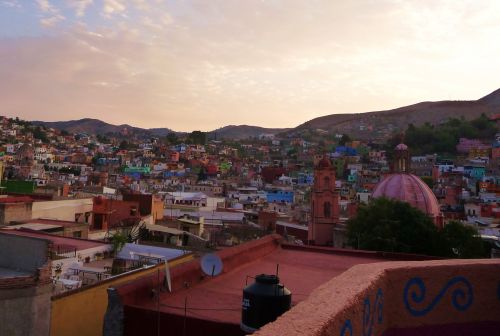
On Mexican Time went on to become a bestseller while Travel Advisory was hugely admired by the dozen or so people who read it. Tony no longer lives in San Miguel de Allende, but has moved to Guanajuato, a small colonial city that I think is a wonderful escape for a long weekend away from the D.F. For a city its size – population 150,000 – there is a lot to do: restaurants, bars and cafes, live music (both classical and jazz), a cineclub and so forth.


ss-1


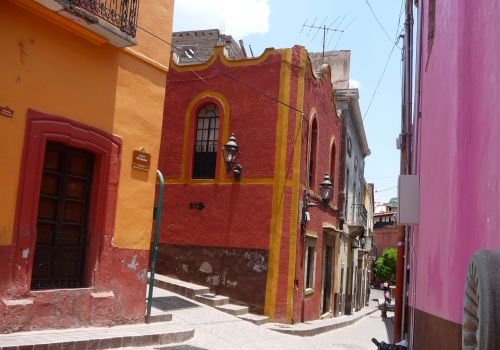
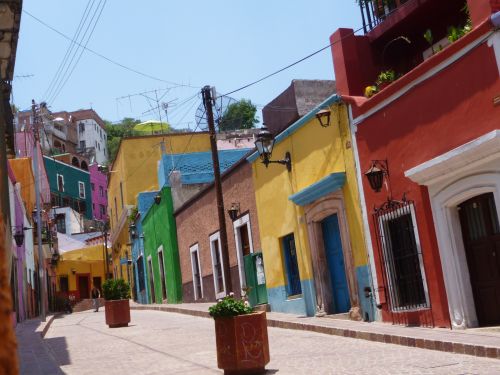
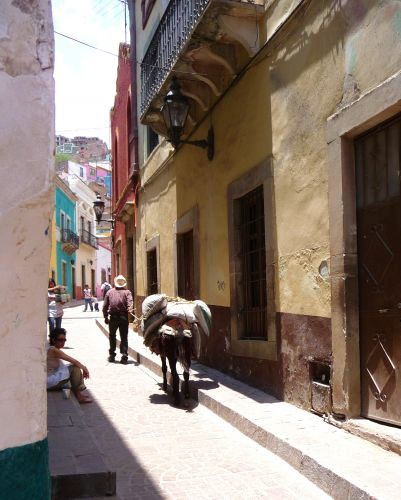
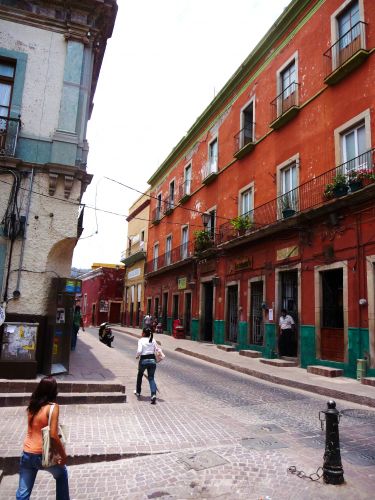
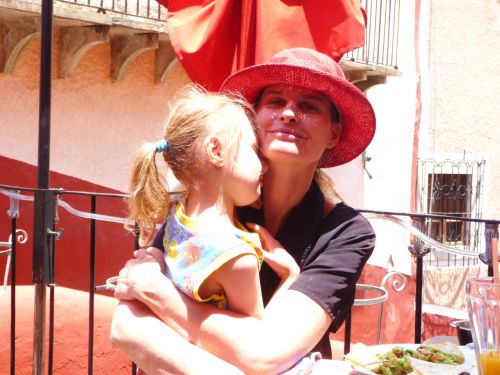
Tony’s companion is the Danish writer Karen Margrethe Adserballe, whose beauty is only surpassed by that of their daughter Aviaya. The photos may help to explain some of Guanajuato’s appeal.


ss-2


ss-5


ss-4


ss-6

At the movies

hijo-de

When films from the U.S. are shown in Mexico, exhibitors not only translate but frequently change the titles. In the Mexican adaptations, certain heated words are almost always utilized -- among them death, murder, fatal, mortal, passion, desire, secret, terror, horror and so on. My ex-wife, who used to write movie criticism for the newspaper La Jornada, once marveled in print that they had not retitled Hamlet as My Son is an Incestuous Killer. Once in a while, however, the Mexican title is better than the original. Oliver Stone’s film about George W. Bush, W., has just opened here, and they’ve called it Hijo de … Bush. For those who don’t understand Spanish, that would be translated as Son of a … Bush.

Back in business

Several readers expressed interest in El Jarrito, the cantina that I mentioned in the vignette that ran in the New York Times earlier this month. I returned a few days ago and was relieved and delighted to find it reopened.

This fellow came in, ordered a beer, and immediately went to sleep. Perhaps he was exhausted from all the stress related to the swine flu, or maybe his reading material -- the Federal District's Civil Agenda -- was too soporific to keep him conscious.

Unfortunately the waitress about whom I wrote was not working that evening. The cheerful one who served our drinks agreed to pose for a picture, but her smile disappeared as the camera snapped.

More on masks

couples-1

In 1950, poet Octavio Paz -- the only Mexican to have ever won the Nobel Prize for literature -- published El laberinto de la solead (The Labyrinth of Solitude). An essay about Mexican identity, nearly 60 years later it is still his most celebrated work. Some of it may be a little dated, but several of its chapters are startling in how relevant they still are.

cops-1

The most pertintent and germane chapters are called "Mexican Masks" and "The Sons of La Malinche." Read together, they reflect that Mexicans typically hide behind impersonations -- metaphorical masks -- of servility or dominance, indifference or remoteness, disguising what are deep-seated feelings of suspicion, mistrust, resentment and inferiority.

jorge

At all costs, wrote Paz, Mexicans resist revealing themselves to others. Doing so would be a sign of weakness, and expose them to all sorts of terrifying vulnerability. Paz wrote that Mexicans viewed life as combat.

newsie

"His face is a mask," wrote the poet, "and so is his smile. In his harsh solitude, which is both barbed and courteous, everything serves him as a defense: silence and words, politeness and disdain, irony and resignation."

couples-2

And, "He builds a wall of remoteness between reality and himself, a wall that is no less impenetrable for being invisible."

bike

Perhaps Paz's essay goes some way in explaining why Mexican health care authorities, even with the CDC and the WHO breathing down their necks, have managed to avoid exposing details of how they managed -- or perhaps mismanaged -- the swine flu crisis. We stll know very little about why most of the few people who died of it are Mexicans, and next to nothing about the Mexicans who died. This article which appeared late last week reveals a few details.

taco-guys

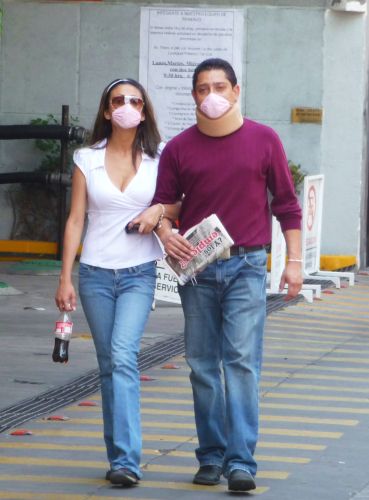
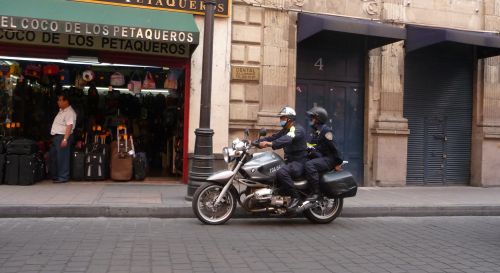
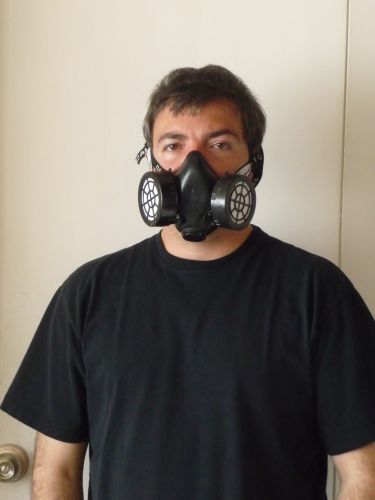
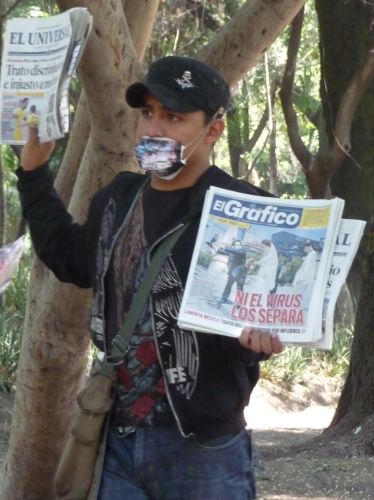
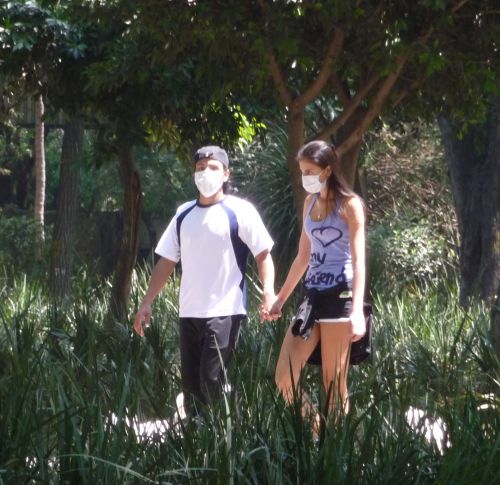
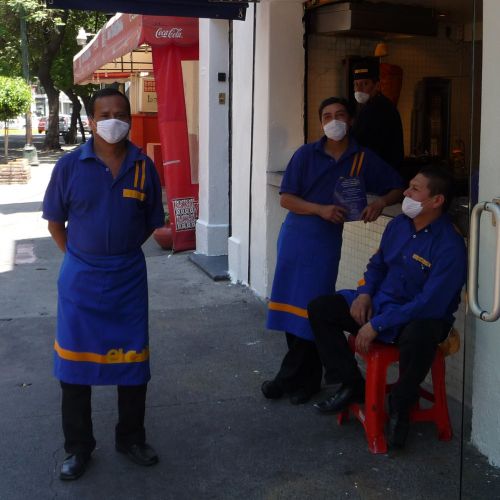
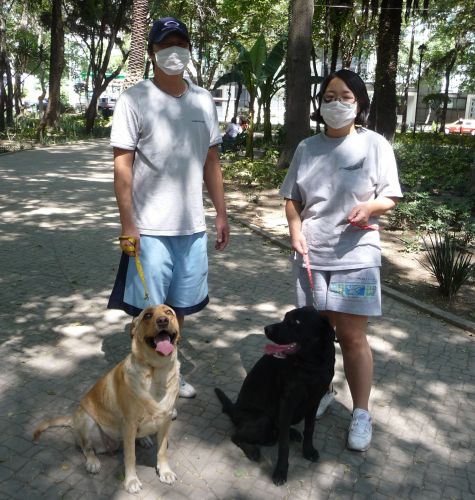
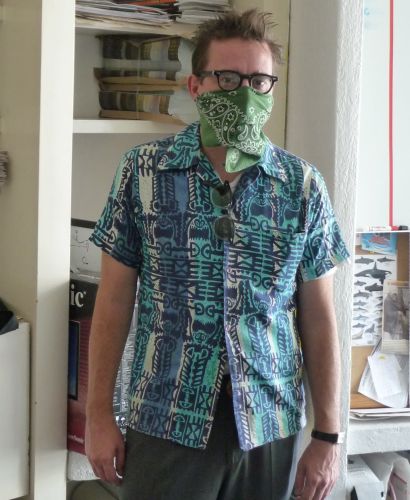
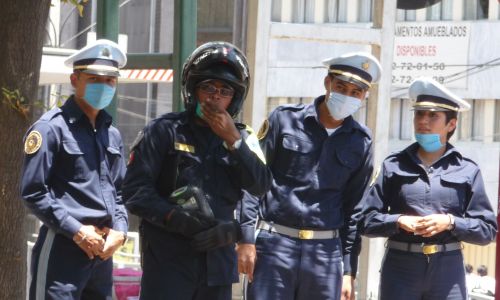
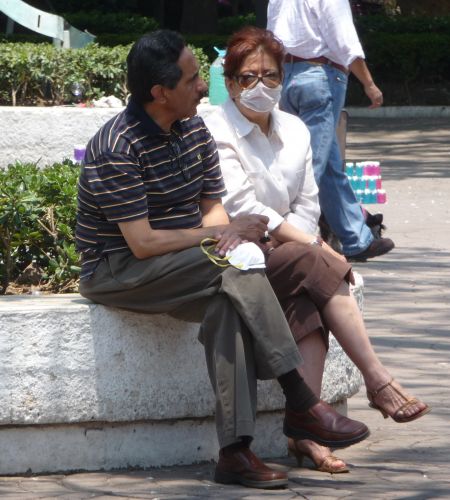
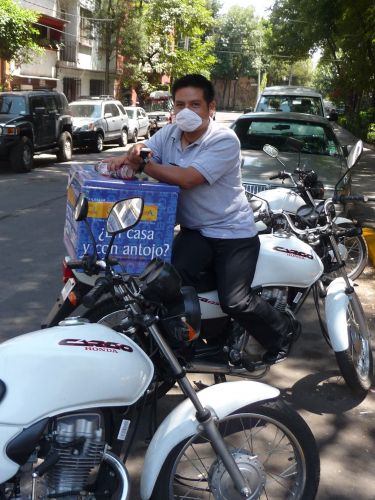
I wonder what the poet would have thought of those days when so many in Mexico City wandered its streets wearing officially sanctioned surgical masks, disguising (or perhaps exposing) whoever it is that they are. Perhaps he would have seen it as their shining hour. This montage is in his memory.

couples-4

P.S. Here is a link to a story about a poor creature who must know how the Mexicans feel these days.

parker

cops-2

red-meat

couples-3

delivery