The other World Trade Center

wtc


Longtime readers of this blog know that I sometimes visit a tarot card reader named Carmen María Oca. I have been living in the same apartment for nearly five years, but Carmen María  says that I will not be here much longer. (Actually, she has been saying that practically since I moved in.) Just in case I end up moving, I thought I’d write a post about the neighborhood’s most conspicuous monument. See that monolith looming in the near distance? That’s the World Trade Center. Should any terrorists get it into their heads to blow up something in Mexico City, they won’t have to look much farther.


wtc-7


On the ground floor on one side of the building is the entrance to a space where trade fairs are held. On the other side, you’ve got this café, hideously expensive but very pleasant in balmy weather.


wtc-1


Inside, on most of the forty-something floors, there are offices. They make you register at this desk and leave an I.D. if you have an appointment.


wtc-3


On the first few floors of the building all sorts of products and services are offered.


wtc-2


But if I indeed move what I will miss the most is having this 15-screen multiplex in walking distance from my apartment.


wtc-4


(I just saw The Wrestler. I know I’m merely getting on the bandwagon here, but I’d forgotten how awesome an actor Mickey Rourke is.)


carmen-maria-3


Here’s Carmen María, one of the brightest stars of my Mexico City constellation. If anyone wants a tarot reading, write her at carmenmariaoca@hotmail.com
Café ¡olé!

It was not easy to find a good cup of coffee when I arrived in Mexico City in 1990. Although Mexico is a coffee-producing country, to this day, most of the good stuff is exported. Advertising here is insidious: In certain homes, when guests arrive, it is still considered “sophisticated” to bring a jar of Nescafe to the table. Many Mexicans forego coffee altogether, having been convinced that things go better with Coke.


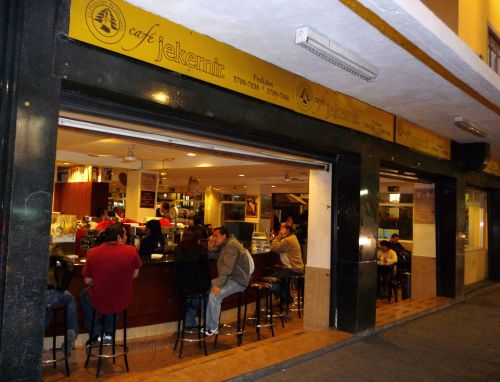
jekemir


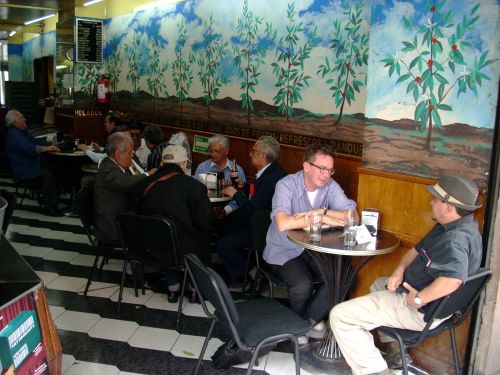
The only reliable places at the time were a few time-honored cafés in the Centro Histórico. Luckily they are still there. You cannot beat the cortados – espresso cut with a drop of steamed milk – at Café Jekemir at the corner of Calles Isabel la Católica and Regina, pictured above. Running a close second is Café Rio, on Calle Donceles, a few doors down from Calle Brasil, pictured below. You may have to work your way around the insufferable intellectuals, like the two mugs at the front table.


cafe-rio-1


But suddenly in the late 1990s and early 2000s, cafés began to spring up one after another, multiplying like a virus.


silo


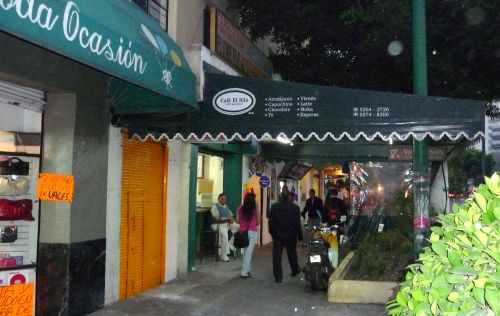
Who would have ever thought that people in Mexico City would have developed such an urgent jones for caffeine? Most of the new generation of cafés were not particularly prepossessing, like the one pictured above on Avenida Insurgentes.


starbucks-2


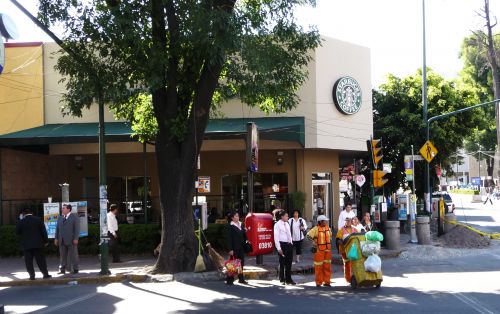
In 2002 Starbucks was introduced to the Mexico City firmament. Today there over 100 of them in the metropolitan area, and about 250 in the entire country. The mostly younger clientele considers itself chic and cosmopolitan. Some chilangos hate the chain and feel it represents the scourge of globalization. The worst damage I perceive that Starbucks has done is hip the other café owners as to how much they can charge for a cup. After Starbucks’ success, they all raised their prices.


selva


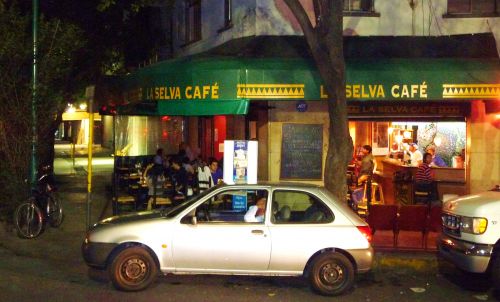
The Café La Selva chain, which has ten stores in Mexico City and three in other parts of the country, serves organic coffee from Chiapas. Their mezcla de la casa (house blend) is delicious. Anyone who stays the night with me gets a cup of it in the morning.

James Bond's hotel

tamayo

When people ask me for hotel recommendations in Mexico City, they are usually looking for budget options, but if money is no object I steer them to the Camino Real on Avenida Mariano Escobedo in the Colonia Anzures. Opened in 1968, it was designed by architect Ricardo Legorreta in the form of a pyramid, evoking pre-Hispanic Mexico. Yet many of the design elements, including bright yellow and pink paint, are very much of the period. Indeed, while walking through its halls, or sitting in the lobby bar (with a clear plastic floor, and water underneath), I feel like an extra in a James Bond movie.

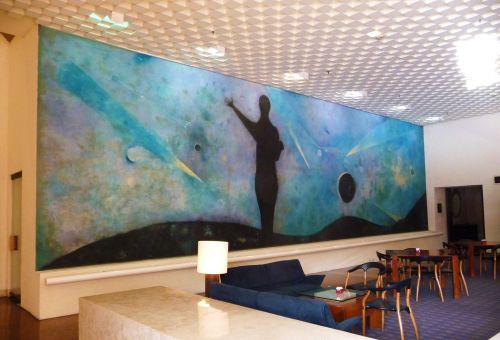
Even if you aren't looking for a place to stay, or cannot afford the Camino Real, you might want to have a drink in that bar. Or better yet, a coffee in the cafe, where you can ponder this Rufino Tamayo painting.

Sweaty tacos

puesto1

It is the dream of every unskilled Mexican with no connections to establish a business selling food. Particularly profitable are stands on the street, because they require minimal investment and their owners are duty-bound to pay few taxes. Some don’t pay any at all.

The least adorned points of sale are those which dispense tacos sudados – sweaty tacos, so-called because after being fried in the morning, they sit steaming in a basket during the day until their vendors sell out. (They are also known as tacos de canasta, or tacos in a basket.) Most commonly stuffed with potatoes, beans, fried pork rinds or green mole, they are delicious and extremely cheap – usually 3.5 pesos, or about 23 cents U.S. at the current exchange rate.

Juan Monsalvo, the fellow who from whom I most commonly buy tacos sudados, reeks of humility. Missing a couple of front teeth, he is impeccably well-mannered and always speaks to his customers using the polite form of address. I once asked him how many tacos he sells a day. He said that on a good day he will sell out his ration of 250. At 3.50 pesos each, that represents gross earnings of over $50 US.

But then he told me that he gets up at four o’clock each morning and makes 2000 tacos. A phalanx of salesmen buy the rest from him at a peso each and vend them on their own streetcorners. His workday lasts twelve hours. Math is not my strong point, but I believe he makes more money than I do.

Department of self-congratulation

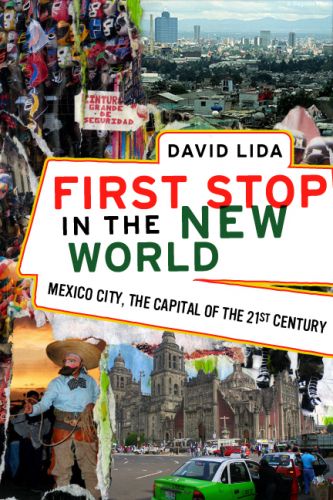
When you write a book, you never know what's going to happen. Sadly, most of them disappear into black holes, never to be heard from again. I am relieved that the critical response to First Stop in the New World, my panoramic look at Mexico City, published last June by Riverhead, was so overwhelmingly positive. (Click here to get to its Amazon page and read fragments of the reviews.)

first-stop-cover

There were more surprises at the end of last year. It was named one of the best fifty non-fiction books of the year by the San Francisco Chronicle (click here) and one of the ten best books of the year by an internet site called The Globalist (click here).

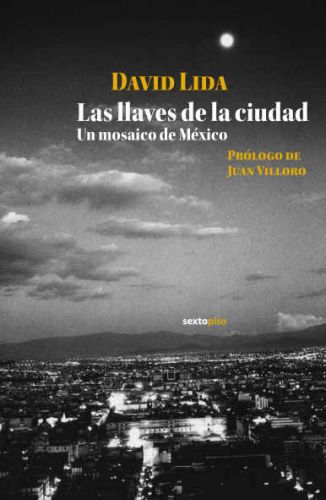
cover-llaves

My other book, Las llaves de la ciudad -- a collection of magazine pieces about some of Mexico City's most extraordinary citizens -- was named one of the 12 best books of the year by Críticas, a magazine that reviews books in Spanish in the U.S. (Click here.) It is in bookstores all over Mexico. After a long delay, it is finally available on Amazon (click here), at Barnes & Noble (click here) and at Borders (click here).