Chicken King, part one

july-31-054

The Colonia Condesa is the most resolutely trendy neighborhood in Mexico City, with its boutiques for twenty-somethings who have the slender bodies that can support jeans imported from Argentina, myriad restaurants with “fusion” cuisine, three Starbucks, wine bars and so forth. However, in this neighborhood you will also find the resolutely old-fashioned restaurant Tio Luis, which has been in continuous service since 1939 on the quiet corner of Cuautla and Montes de Oca.


For about 60 years, the proprietor of Tio Luis was Pedro Yllana, who had been a bullfighter in his youth, and as such the restaurant is decorated with posters and photos of la fiesta brava. (Unfortunately, Yllana passed away a few years ago. He was well into his 90s and now his heirs run the place.)


The menu at Tio Luis is eclectic, from enchiladas to paella to milanesa Holstein (a breaded cutlet with a fried egg and an anchovy on top). However, the place's nickname is el rey del pollo – the chicken king. Of the varied chicken dishes on the menu, the standout is Pollo Tio Luis (pictured above). It is the closest approximation to authentic Southern fried chicken that you can find in Mexico City.


Summertime and the living is easy


In Mexico City, it rains in the summer. Once in a while the rain lasts all day and it gets rather cold (at least by the standards of the temperate climate here). But usually it only rains for an hour or so in the afternoon (some days it doesn’t rain at all) and the weather is marvelous. Here are some signs that summer is here.


Bella Italia


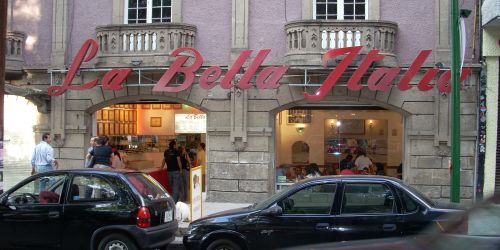
La Bella Italia, which serves the best ice cream in the city, is packed. It’s on Calle Orizaba, just south of Álvaro Obregón, in the Colonia Roma.


kid


Here’s a kid on his summer job, directing traffic around a construction site. How old do you think he is?


pb


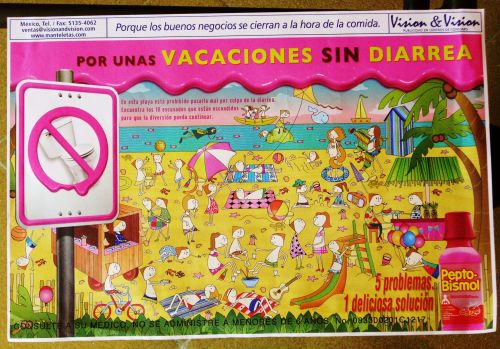
This is a paper placemat used in cantinas and cafeterias at lunch hour. Usually, these placemats sport five or six small advertisements for local businesses. This one is obviously a full-page ad for Pepto Bismol. For those of you who don’t read Spanish, across the top of the sheet is the legend, “For vacations without diarrhea.” The fine print above the drawing says, “It’s prohibited to have a bad time at this beach due to diarrhea.” Perhaps appealing to the kiddies, or to those who are young at heart, within the sketch are ten hidden toilets you’re supposed to find (while waiting for your meal). Welcome to Mexico.

"Negrito" and other terms of endearment

I’ve never met a Mexican who copped to being a racist. Some, particularly from the upper echelons, lament that their society is class-based, but argue that since nearly everyone is mestizo – with a mixture of Spanish and indigenous blood – therefore how could they be racist? Let’s just say that some people are more mestizo than others. The last Mexican to make this point to me has blond hair, blue eyes and alabaster skin. He speaks perfect English in the tones of Oxford, where he went to prep school as a boy.

june-6-055

So how do Mexicans explain the various pejorative words they use to describe people, such as franchutes for the French, gachupines for Spaniards or gringos for people from the U.S.? Or the derogatory remarks they make about Jews, Argentines, Cubans, as well as other national or ethnic groups? (For the record, nearly all Mexicans with whom I have broached the subject say they consider gringo to be an “affectionate” term.)

negrito

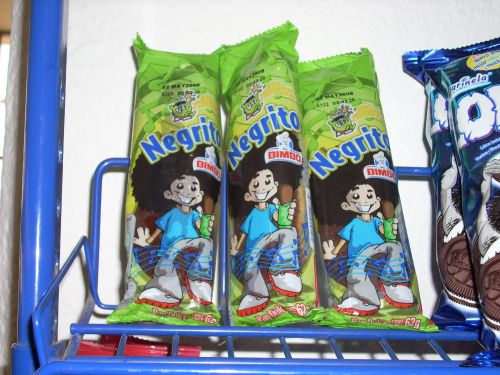
All black people – whether Nelson Mandela, Condoleeza Rice or 50 Cent – are referred to as a negritos around here. Negrito, literally translated, would mean something like “little blackie,” but is in spirit pretty close to the dreaded “n” word in the English language. This is presumably another “affectionate” term, so much so that a popular snack cake – chocolate, phallic-shaped and stuffed with cream – was given the same name, and a corresponding Afro-topped character to illustrate. The catchphrase for the cake is te dejará huella – more or less, “it will leave its shadow on you.”

memin

The above is a cover from the comic book Memín Pinguín, named after the lovable tyke about to tuck into the hamburger. Memín was described by his creator, Yolanda Vargas Dulché, as un chiquitín negrito de ojos enormes y muy chistoso – “a very funny little negrito with enormous eyes.” Although she drew the comic between 1945 and 1952, the series has been perpetually reprinted, and beloved, to this day. In 2005, when the Mexican Postal Service printed stamps in honor of Memín Pinguín, they sold out within a matter of hours. Various U.S. politicians, including Jesse Jackson, complained, ensuring the historical place of the stamps as collectors’ items.

Night of the living uniforms

oscar-52

(Photo by Everett McCourt)

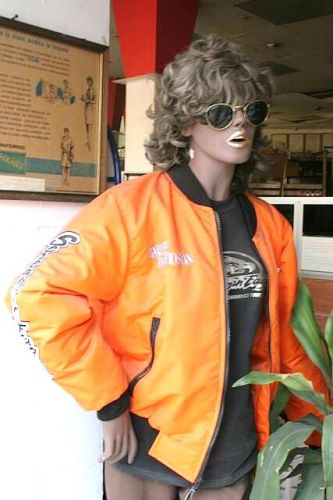
When out-of-towners come to visit me, I send them off to the Anthropology Museum or Frida Kahlo’s house by themselves, and catch up with them later for lunch at the cantina. But one “gallery” where I have accompanied friends countless times is Oskar, a store on Avenida Insurgentes and Calle Chihuahua in the Colonia Roma. Here you can buy uniforms of any kind – night-duty nurse, coffee-shop waitress, French chambermaid, eager bellboy, pit-stop girl and the like.

oscar-1

(Photo by Everett McCourt)

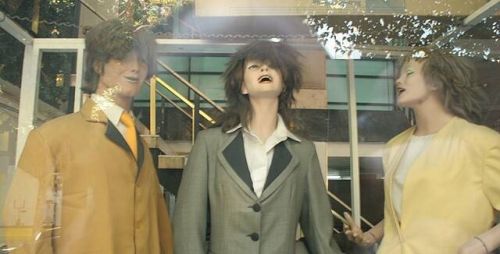
All the mannequins appear to be about 40 years old and wear wigs with the corresponding decades of neglect. They look like shipwreck survivors, or people who've had their hair cut with a lawnmower. Their hands – those that still have them – tend to make expressive or even extravagant gestures, sometimes bent into positions impossible to duplicate in real life. Some are in disturbingly suggestive poses.

oscar-4

(Photo by Everett McCourt)

If you are interested, there is a little more about Oskar in my book, First Stop in the New World (see books page). A word of warning: If you come here hung over, it could be a little frightening. It's almost possible to imagine the mannequins as human beings. Oskar would be a great setting for a horror movie, with the protagonists trapped inside and the mannequins coming to life.

oscar-3

(Photo by Everett McCourt)

Pruned

cubist

No self-respecting tree in Mexico City is allowed to grow wild. The cubist models pictured here are a testament to the tonsorial obsessions of the people who attend to nature around here.


mushroom

The flying saucer look, aka the mushroom, is in this year.


april-12-003

So is the marshmallow line-dance. The photo above is actually in Celaya, Guanajuato, but you get the idea.