Blast from the past

Every Sunday, the largest flea market in Mexico City converges on and around the corner of Reforma and Comonfort. This is the edge of La Lagunilla, a street market that sells new stuff every day, but blasts from the past only Sunday. One of my first posts in this blog was about people who sold Nazi paraphernalia at the flea market. I am happy to report that they are gone, although there are still people who sell the odd Nazi item among the rest of their stuff. See below.

It had been ages since my last visit to La Lagunilla, so I went a few Sundays ago. It was as much fun as ever. Here are some of the items that were for sale.

I was a little concerned about how few people were there. I wondered if it had anything to do with the fact that for the past couple of years each Sunday morning a huge swath of Paseo de la Reforma is closed to cars so that bicyclists can enjoy it. This may impede passage to La Lagunilla.

There was a woman on Reforma who was selling issues of a magazine called Agenda from the 1970s, which advertised the shows in restaurants and nightclubs of Mexico City in those golden days.

Nearly of the places on these pages are gone now, as is the whole style of variety entertainment they advertise.

I did manage to get to Las Catacumbas before it closed its doors in the early 1990s. It was on calle Dolores, near the Alameda. A guy dressed in a monk's robe greeted you at the door, and took you down a long hallway. At the end of it a skeleton popped out and scared the daylights out of you. Then you went inside the club and enjoyed the show.

At a dingy nightclub in the colonia San Rafael, Gabriela Rios, known as La Che, entertained at my bachelor party in 1992. Honey, if you're still out there, I got divorced ten years ago.

I bought these magazines from a woman who told me she appeared in their pages. Here she is, back in the day. Stupidly, I didn't think of taking her picture but I assure you that Mina Beltrán has hardly changed a bit.


Climb those stairs

Every tourist guide to Mexico City suggests a visit to the Casa de los Azulejos (the House of Tiles) on the corner of Madero and Callejón de la Condesa in the centro histórico. Constructed in the late 18th century, the facade is covered with blue and white tile from Puebla. It was a private house until the early 20th century, when the Sanborn brothers bought it and renovated it into one of their chain store/pharmacy/cafeterias.

Many tourists, frightened of what mysterious bugs they might pick up from eating at markets or at taco stands on the street, haunt the lunch counter and the restaurant, where the fare is allegedly safer. Middle-class Mexicans also congregate here. You can check out one of Orozco's earliest murals inside.

Almost no one, however, climbs the stairs to the bar on the upper floor. I don't know why -- it's a pleasant, old-school setting to have a drink.

From the bar there are balconies where you can step out for views of the surrounding streets of the centro.

And even these street "performers" putting on their cartoon-character costumes.

They make a hell of a Bloody Mary, too. The Sanborn's chain is owned by Carlos Slim. The bar is one of  the few unimpeachable parts of his empire.

This is why I like cantinas

La 7 puerta
La 7 puerta

If you know my work, you're probably aware that I have written frequently about cantinas. There is a whole chapter about them in my book First Stop in the New World, and on the journalism page of this website there is an article about them. However, I don't go to them as often as I did in the bloom of youth -- or even five years ago. They are mostly an afternoon affair, and the older I get the harder it is to get through the night after an afternoon of drinking. If I drink too much too early I feel hungover by eight in the evening, and that's pathetic.

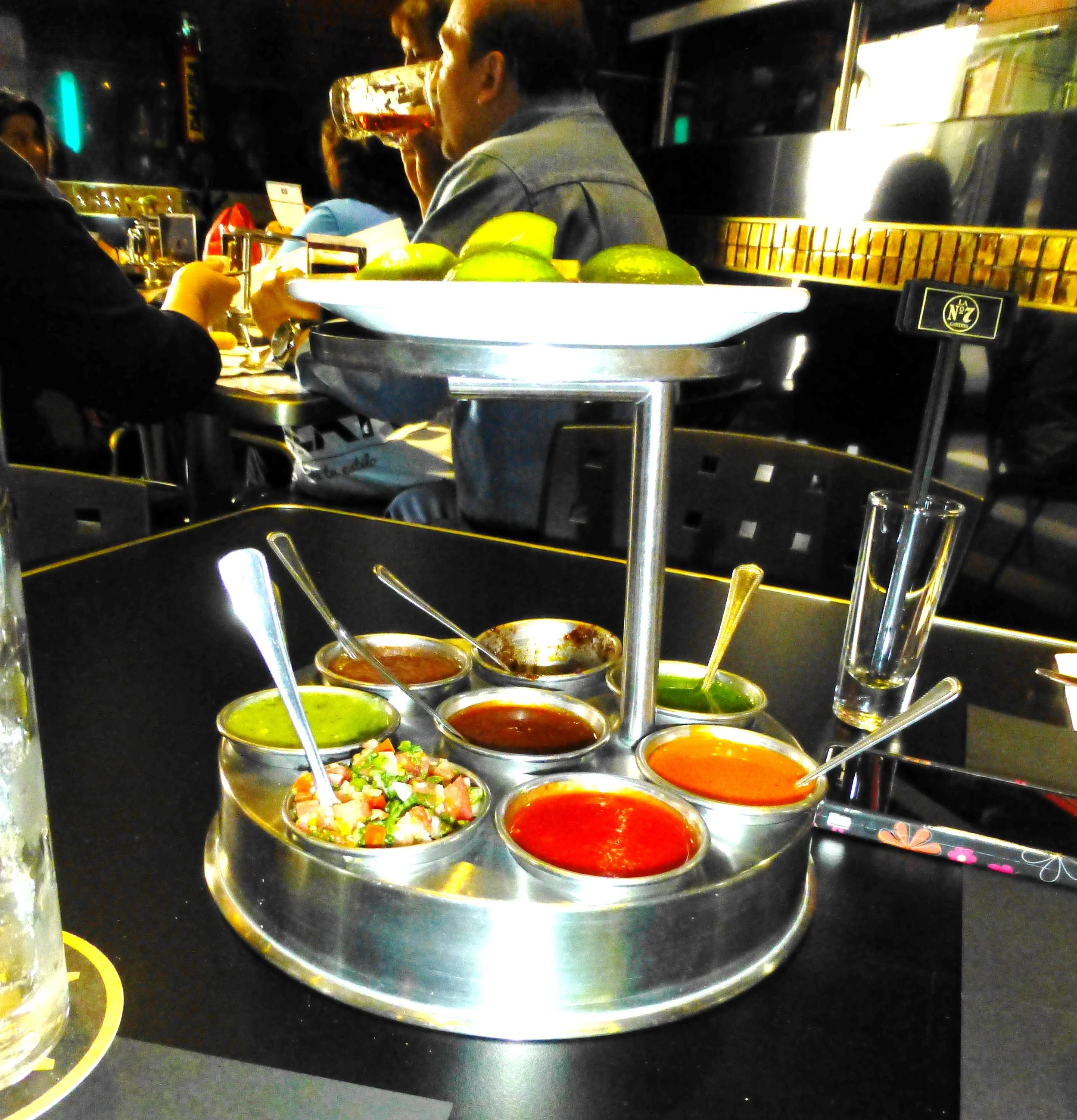
La 7 8 salsas
La 7 8 salsas

Still, once in a while I can't resist them. My friend J.M. Servín recently told me about a cantina in the centro histórico called La Número Siete, on Calle Ayuntamiento #21, between López and Dolores. It has recently undergone a renovation, and I had a great afternoon there.

La 7 salpicón

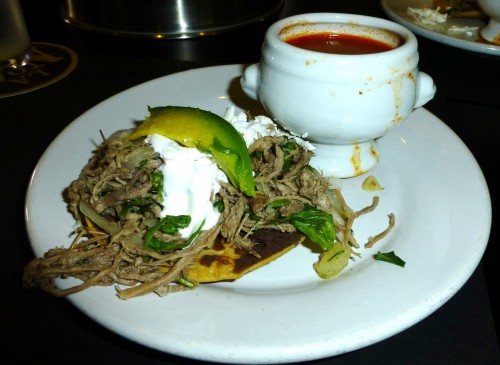
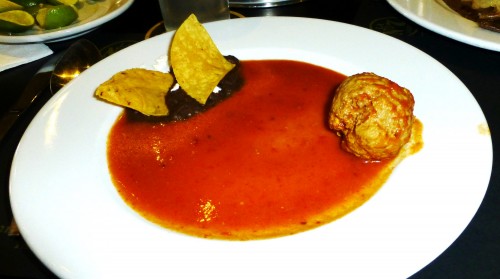
Most cantinas in Mexico City serve botanas -- free food that accompanies the drinks that you pay for. At La Número Siete they are abundant and delicious. The day I went there they included, among other things, tostadas with shredded beef, meatballs in chipotle sauce and liver and onions.

La 7 albóndiga
La 7 hígado
La 7 pastor
La 7 pastor

You can also order from an a la carte menu, and if that isn't enough, La Número Siete is next door to El Huequito, a hole in the wall that has what many think are the best tacos al pastor in the city. (They have a lot of competition.) You can order them from El Huequito and the waiters from La Número Siete will run and get them for you.

La 7 jefa
La 7 jefa

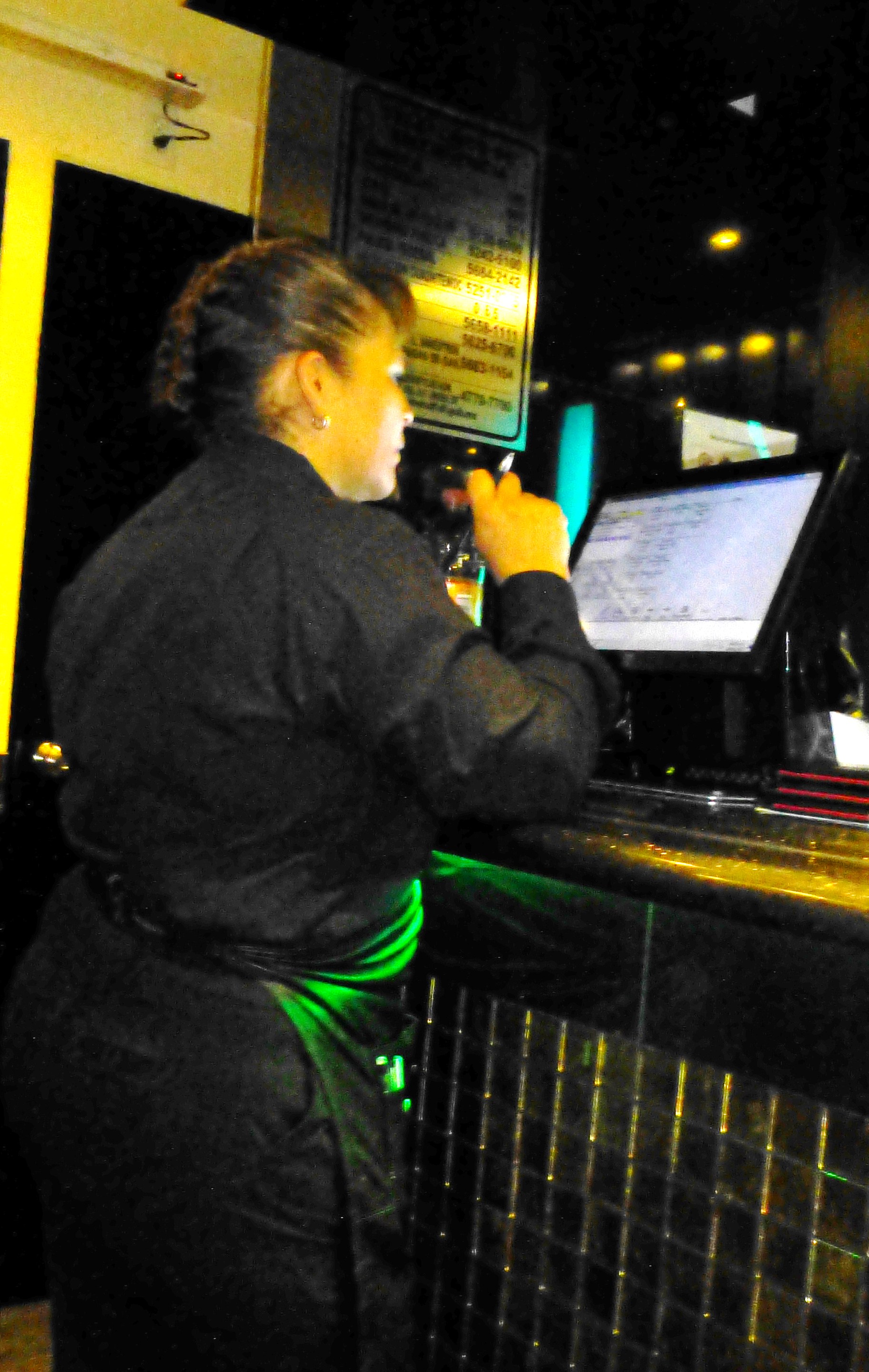
Unlike many cantinas there are women personnel at La Número Siete, including this subject, who referred to herself as la jefa (the boss).

La 7 mesera
La 7 mesera

Or this one, who waited on our table.

Because of the botana, I've always thought that cantinas in Mexico City are more civilized than bars in the United States and most of Europe, where you can count yourself lucky if there is so much as a bowl of peanuts to accompany your drink. Drinking always goes down better if good food accompanies it.

Alameda facelift

For nearly all of 2012, the Alameda Central was closed for renovation. I was worried about what might happen to Mexico City's oldest park, which goes back about 400 years. Things don't tend to get better when they are supposedly "fixed" by governments.

It took me a few months to get there -- it was reopened at the end of last year. But I think they did a terrific job. The passageways were repaved with white marble.

The fountains and the statuary were all given a shine and a polish, and there is more greenery than ever, including these lavender bushes, which I understand are easy to maintain.

I went on a Sunday. Before the renovation, las muchachas -- young women who work as housemaids, most of whom come to the city from the provinces -- would dress up and congregate en masse at the Alameda on Sundays, their day off. They would be courted by their male counterparts -- construction workers, shoe shine boys, grease monkeys -- similarly spiffed up for the day.

None of these people were there on the Sunday I visited. It was all middle class families. Ever since I have been haunted by the question: What happened to the muchachas?


Upper crust comida corrida

AB-dining-room.jpg

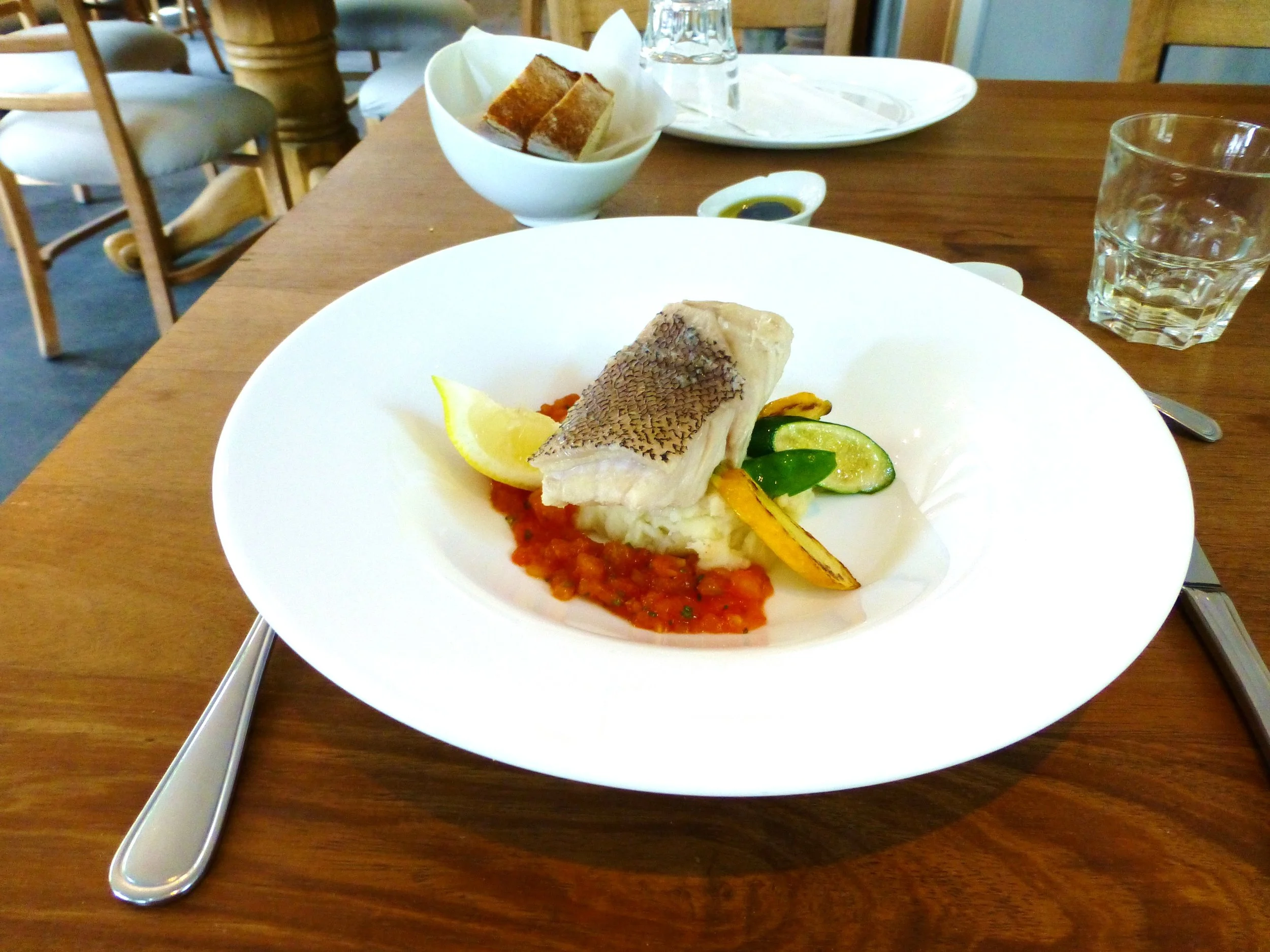
It is more expensive than the typical comida corrida, but it is also more elegant, healthier and has fresher ingredients. At the corner of Sinaloa and Medellín, a restaurant called Artisans et Boulangers is a great place for a quiet lunch in the colonia Roma Norte. The chef is Japanese, and much of the food, although Western, is at least inflected by her home. They start you off with fresh bread, subtly flavored water (it was chamomile that day) and a homemade olive spread.First course the other day: salmon tartare. Followed by poached extraviado (a fish similar to grouper), served with mashed potatoes and grilled vegetables.

AB japonesa
AB place setting
AB tártara
AB fish
AB postre

And what they call "angel cake," with homemade whipped cream. All of this, with coffee, cost 179 pesos.

AB menú
AB calle