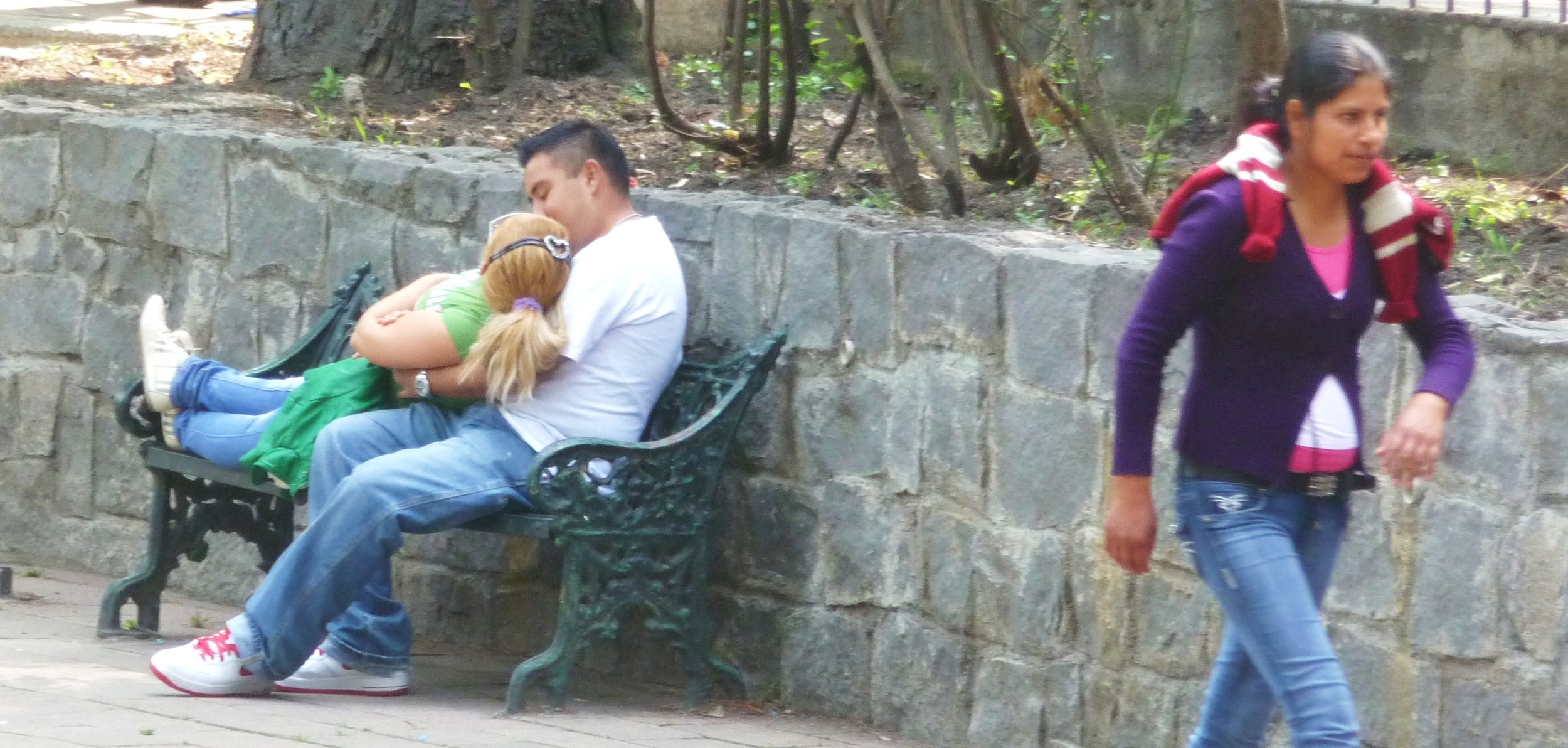
When I arrived in Mexico, some of the friends I made (particularly those who were brought up in well-to-do homes), were horrified when I told them about the food I eagerly sampled. They would have never eaten, for example, from the various stalls on Calle Chilpancingo between Tlaxcala and Baja California, which collectively form a monument to how much grease and how many microbes you are willing to ingest. They wouldn't allow me to take a picture, but the third stall from the corner of Tlaxcala -- where the woman with the white shirt is passing by -- is my favorite, with fantastic tacos de guisado. The tortillas are heated on a grill and then filled with delicacies kept warm on a steam table, such as chorizo with potatoes, pork skin in green sauce, strips of chile peppers in cream, and morcilla, a kind of sausage whose origins are probably best left unconsidered.

You can also get carnitas that have been cooked in huge vats of sizzling fat, and tacos made from the head of a pig (eyes, tongue, cheeks), the meat steaming under sheets of plastic.

There are also less threatening, although only slightly less fattening options: tortas (Mexico's answer to the sandwich), flautas (tacos that have been rolled up and deep fried), tacos made from beef or even chicken breast.

After all the years I have lived here, I believe I have built up a tolerance to the amoebas that might be festering in some of this food. However, a few years ago my cholesterol levels began to climb, and the doctor suggested I take better care of my diet. So I eat less frequently on Calle Chilpancingo, and indeed, on the street at all. One of my favorite Mexican expressions is, no me pueden quitar lo bailado. It sounds better in Spanish, but means, they can't take away the dances I've already danced.