Santa María and Jesús

Kiosco

The gazebo in this photo was Mexico's contribution to the 1884 World's Fair, held in New Orleans. Given its Moorish design, it was known as the "Mexican Alhambra Palace." After the fair, the cast-iron structure was disassembled, brought back to Mexico City in pieces, and rebuilt in the Alameda Central. From its perch lottery winners were announced. Around 1910, it was replaced by the Monument to Benito Juárez (now on Avenida Juárez) and moved to the Alameda of a neighborhood called Santa María la Ribera.
SG2

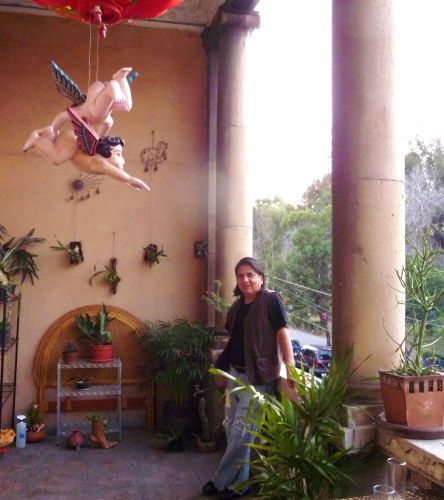
Santa María la Ribera is one of my favorite areas of the city. It has had a bad rep since the 1840s, when a citizen council complained to federal authorities of thugs who roamed the area. Today, it's a traditional neighborhood, full of cantinas, modest restaurants and snack shops, that is in the process of gentrification. You can tell it's on the rise due to the proliferation of internet cafes, gyms, coffee houses and other businesses that tend to be patronized by the middle class. My friend Jesús Chairez (who has several blogs and websites about Mexico City) lucked out when he found an incredible apartment with this balcony that overlooks the Alameda. Everyone's luck runs out, though. He says his landlady is selling the building.

Museum of murdered matadors

faena-2

One night not long ago, the manager of a cantina called La Faena in the centro told me the place had been around for 40 years. But even the glasses look older than that. Many cantinas are decorated to reflect a passion for bullfighting but La Faena, at Calle Venustiano Carranza 49, is the bullfight cantina por excelencia.

faena-1

There are mosaic tiles, clay molding and the coats of arms of various Mexican states in relief. It is huge and there are almost never any clients in evidence, which gives it a solemn, almost funereal air. So it's a good option to meet someone with whom you would prefer not to be seen, or fifty of your closest friends.

What is most fascinating about La Faena is a series of showcases, inside of which are an exhibition of bullfighters' costumes, which belonged to well known matadors (like Juan Belmonte and El Soldado) as well as long-forgotten novices. The suits are so decrepit they appear to me crumbling into dust before your eyes.

Bless this house

MX-and-NO-007

Looking for a barber shop nearby to my New Orleans apartment, I saw this house on Franklin Avenue, near St. Claude. Its message may be clear but the owner left a few details ambiguous. Is he saying that the Lord protects his house? Or that he actually lives there?

Outskirts of a city without end

outskirts-2

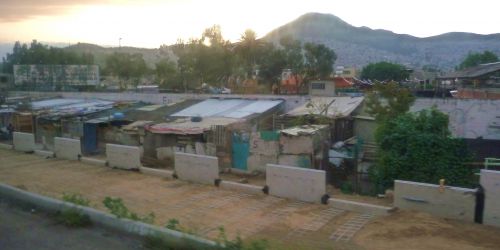
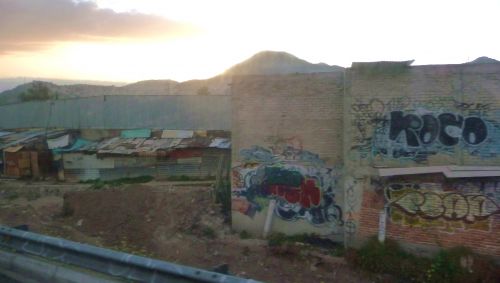
Roughly half of the citizens of greater Mexico City live at or below the poverty level. Most of them are in endlessly extending outskirts, in one-story buildings of grey brick and cement, rebar popping from the roof for that hope-springs-eternal day in the future when a second floor might be built. The great majority of those who live privileged lives in the central areas of the Federal District are blithely unaware of the reality of the urban sprawl here.

ouskirts-1

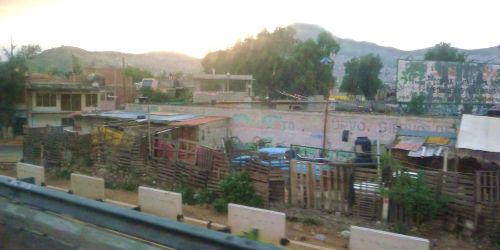
Many who live in the outskirts do not precisely get a complete nutritional package on a daily basis. Still, if anyone dies of hunger in Mexico City it is an anomaly. If those on the oustkirts live in a way that would be considered marginal in the U.S., Canada or most of Europe, they are doing better than the billion or so humans in the world who go to bed hungry every night. There are few homeless here. Virtually the entire metropolitan area is electrified, has running water, garbage collection and a host of services, however incomplete or irregular.

outskirts-3

Unlike some other sections of the country, most in Mexico City tread water at the poverty level but don't sink under its weight. Once in a while, almost miraculously, someone even manages to crawl his way out of it.

(These photos were taken in Mexico State, on the edges of the urban sprawl. The poverty in some sections of Mexico State has been compared by the U.N. to Africa's.)